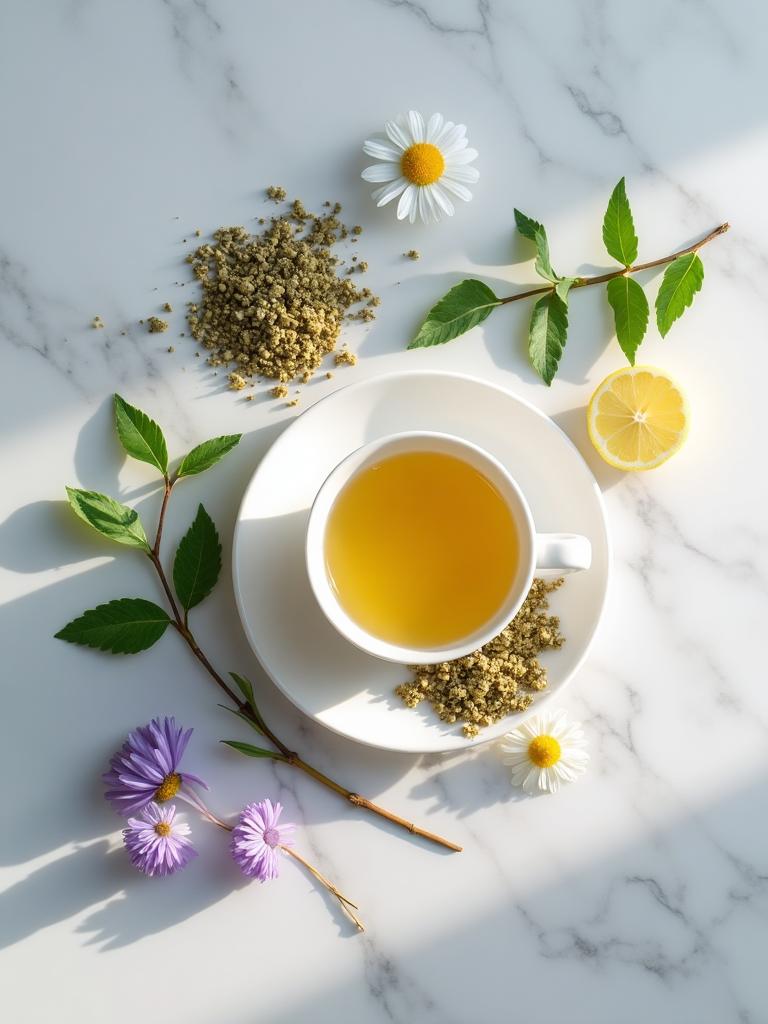
Lemon balm tea for sleep is the quiet workhorse of the herbal sleep toolkit. It doesn't sedate you, but it lowers the physical arousal — the tense shoulders, the wired feeling, the sped-up heart — that stops the body switching into rest mode. It's the most underrated sleep herb in the Mediterranean tradition.
How lemon balm works
Lemon balm inhibits GABA transaminase, the enzyme that breaks down GABA in the brain. More GABA means lower nervous system arousal, less rumination, and an easier transition into sleep. Unlike valerian or passionflower, it does this without producing noticeable sedation — which makes it uniquely useful for people who hate feeling "drugged" by sleep aids.
What the evidence shows
- 2011 pilot trial: 15 days of lemon balm extract reduced anxiety by 18% and improved sleep quality significantly.
- 2004 study: lemon balm reduced measurable stress response and improved calmness within 1–3 hours of dosing.
- 2006 paediatric trial: valerian + lemon balm blend improved sleep in 81% of children with restlessness.
How to brew lemon balm tea
- 1 tablespoon dried leaves (or 2 tablespoons fresh) per cup.
- Water at 90°C — lemon balm's volatile oils are heat-sensitive; boiling water burns them off.
- Cover and steep 10 minutes.
- Optional: add honey and a slice of fresh lemon.
- Drink 30–45 minutes before bed.
Blends worth knowing
- Lemon balm + chamomile — the daily wind-down blend. See chamomile tea for sleep.
- Lemon balm + passionflower — anxiety-focused blend for busy minds. See passionflower tea benefits.
- Lemon balm + valerian — evidence-based for restless sleep. See valerian vs chamomile.
Growing lemon balm
Lemon balm is one of the easiest herbs to grow — a single plant will supply a household with fresh leaves all summer. It thrives in partial shade and self-seeds aggressively. Fresh leaves crushed and rubbed on the wrists release the calming essential oils via aromatherapy alone.
Safety notes
- Very well tolerated; no interaction with common medications
- May mildly suppress thyroid function at high extract doses — flag if hypothyroid
- Safe in pregnancy at tea doses
- Not habit-forming; safe for indefinite nightly use
The bottom line
Lemon balm is the sleep herb for people who want calm without sedation. It works best as part of a blend and pairs beautifully with any of the other main sleep herbs. If your insomnia has a stress or anxiety root, layer lemon balm nightly with the lifestyle changes in our daily sleep blueprint and address the deeper drivers covered in why can't I sleep.
Frequently Asked Questions
Does lemon balm actually help you sleep?
Yes. Lemon balm (Melissa officinalis) has been shown in randomised trials to reduce anxiety symptoms and improve sleep quality, particularly when combined with valerian. Its mechanism is inhibition of GABA-transaminase, which increases GABA availability in the brain.
How much lemon balm tea should I drink for sleep?
1 tablespoon of dried lemon balm leaves per cup, steeped covered for 10 minutes, drunk 30–45 minutes before bed. Fresh leaves work too — use double the volume. Two cups an evening is a common practitioner dose.
Lemon balm vs chamomile — which is better?
Lemon balm is slightly stronger for reducing physical tension (racing heart, tight shoulders), chamomile is slightly stronger for racing thoughts. They complement each other and are commonly blended 50/50.
Can I drink lemon balm tea during the day?
Yes — lemon balm is unusual among sleep herbs in that it doesn't sedate. It reduces stress without causing drowsiness, so daytime use for anxiety is fine and won't interfere with your sleep-drive later.
Are there any side effects?
Very rare. Lemon balm can mildly suppress thyroid function at high doses — worth flagging if you have hypothyroidism. Otherwise it's one of the safest herbs in the sleep toolkit.
References
- Cases J et al. Pilot trial of Melissa officinalis L. leaf extract in the treatment of volunteers suffering from mild-to-moderate anxiety disorders and sleep disturbances. Med J Nutrition Metab (2011).
- Kennedy DO et al. Attenuation of laboratory-induced stress in humans after acute administration of Melissa officinalis (Lemon Balm). Psychosom Med (2004).
- Müller SF, Klement S. A combination of valerian and lemon balm is effective in the treatment of restlessness and dyssomnia in children. Phytomedicine (2006).


