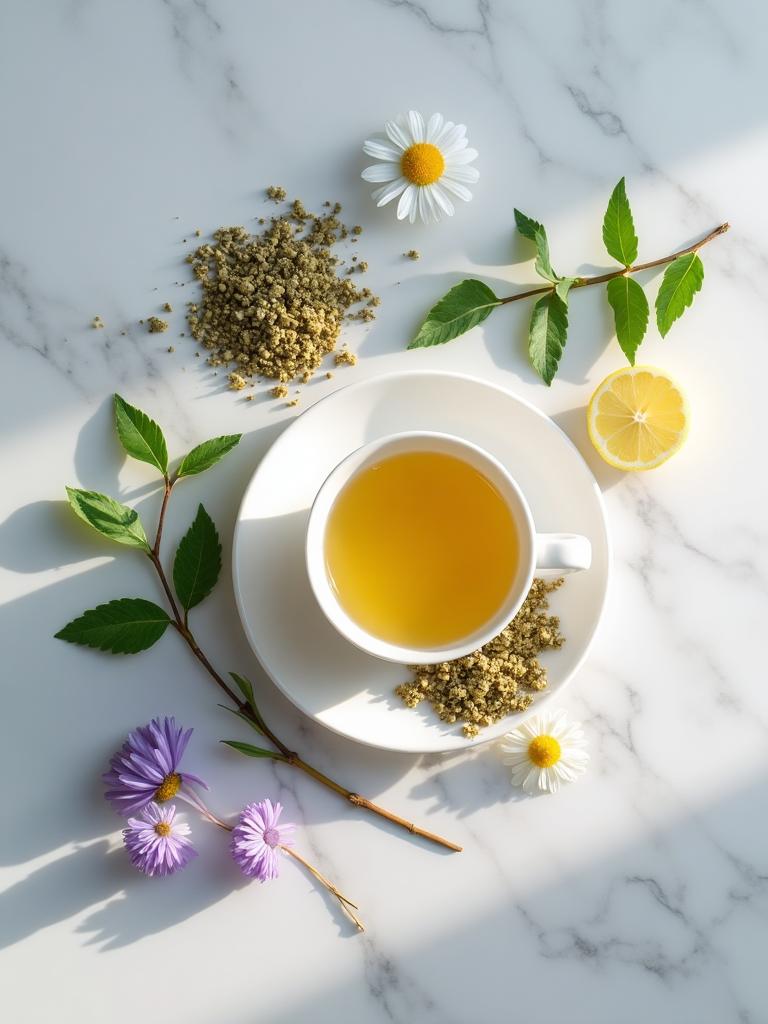
Valerian vs chamomile is the most common question in natural sleep support — and the answer isn't "one is better." They fix different problems. Chamomile is a gentle anxiolytic for racing minds. Valerian is a heavier sedative for people who fall asleep OK but can't stay asleep. Here's how to pick.
Quick verdict
- Pick chamomile if: You lie in bed with a busy mind, feel wired at bedtime, or want a nightly ritual that's safe long-term.
- Pick valerian if: You wake at 3 am, sleep light or shallow, or need something stronger for occasional bad nights.
- Pick both: Anxious brain and fragmented sleep — the combination beats either alone.
Side-by-side comparison
| Feature | Chamomile | Valerian |
|---|---|---|
| Strength | Mild | Moderate-strong |
| Best for | Anxiety / falling asleep | Staying asleep |
| Active compound | Apigenin | Valerenic acid |
| Time to peak | 30–45 min | 60–90 min |
| Full effect | Immediate | Builds over 2–4 weeks |
| Morning grogginess | None | Occasional at high doses |
| Taste | Pleasant, floral | Strong, earthy |
| Nightly safe | Yes, indefinitely | Cycle every 3–4 weeks |
How they work in the brain
Both act on the GABA system — the brain's main "calm down" pathway — but by different routes. Chamomile's apigenin binds directly to benzodiazepine receptors (same site as Xanax, much weaker). Valerian works upstream: valerenic acid inhibits the enzyme that breaks GABA down, so more of your own calming neurotransmitter stays available. Result: chamomile calms; valerian sedates.
Dosing that actually works
Chamomile
- Tea: 2 teaspoons dried flowers, steeped covered for 10 min, 30–45 min before bed
- Extract: 400–1600 mg standardised to 1.2% apigenin
Full brewing detail in our chamomile tea for sleep guide.
Valerian
- Tea: 2 teaspoons chopped root, simmer 5 min then steep 10 min, 60 min before bed
- Capsule: 300–600 mg root extract standardised to 0.8% valerenic acid
- Take nightly for at least 2 weeks — valerian is a slow build, not an on-demand pill
The combination blend practitioners recommend
When patients present with both anxiety and fragmented sleep, functional medicine practitioners commonly blend: 1 teaspoon chamomile + 1 teaspoon valerian + 1 teaspoon lemon balm, steeped covered for 15 minutes. Chamomile handles the wind-down, valerian holds sleep through the night, lemon balm softens valerian's strong taste and adds its own mild anxiolytic effect.
Safety notes
Both are well-tolerated. Avoid valerian if you're pregnant, breastfeeding, on sedatives, or before driving. Avoid chamomile if you have a ragweed allergy or are on blood thinners. Neither is habit-forming, but valerian is best cycled (3 weeks on, 1 week off) to prevent mild tolerance.
The bottom line
There's no winner — there's a right tool for the right sleep problem. Diagnose whether your issue is "can't fall asleep" or "can't stay asleep" first. Not sure? Our 8 root causes of insomnia guide walks you through it. For the wider picture on herbal sleep support, see the best herbal tea for sleep guide.
Frequently Asked Questions
Is valerian stronger than chamomile for sleep?
Yes — valerian is roughly 3–4x stronger and produces a noticeable sedative pull, similar to a very mild sleeping pill. Chamomile calms without sedating. Choose valerian when you can't stay asleep; choose chamomile when you can't switch off your mind.
Can you take valerian and chamomile together?
Yes, and it's a common practitioner blend. Valerian handles the sedation, chamomile handles anxiety. Use half doses of each the first night — the combination is stronger than either alone.
Does valerian smell bad?
Valerian root has a strong, earthy, slightly musty smell — some people describe it as dirty socks. This is normal and doesn't affect potency. In tea form the smell is milder; capsules avoid it entirely.
How fast does each work?
Chamomile works within 30–45 minutes for anxiety relief. Valerian is slower — it needs 60–90 minutes to peak, and its full sleep benefit builds over 2–4 weeks of consistent nightly use.
Which is safer for long-term use?
Chamomile is safer for indefinite nightly use. Valerian is safe but best cycled — 3 weeks on, 1 week off — to avoid tolerance and rare rebound insomnia when stopped abruptly.
References
- Bent S et al. Valerian for sleep: a systematic review and meta-analysis. Am J Med (2006).
- Shinjyo N et al. Valerian Root in Treating Sleep Problems and Associated Disorders. J Evid Based Integr Med (2020).
- Srivastava JK et al. Chamomile: A herbal medicine of the past with bright future. Mol Med Reports (2010).


