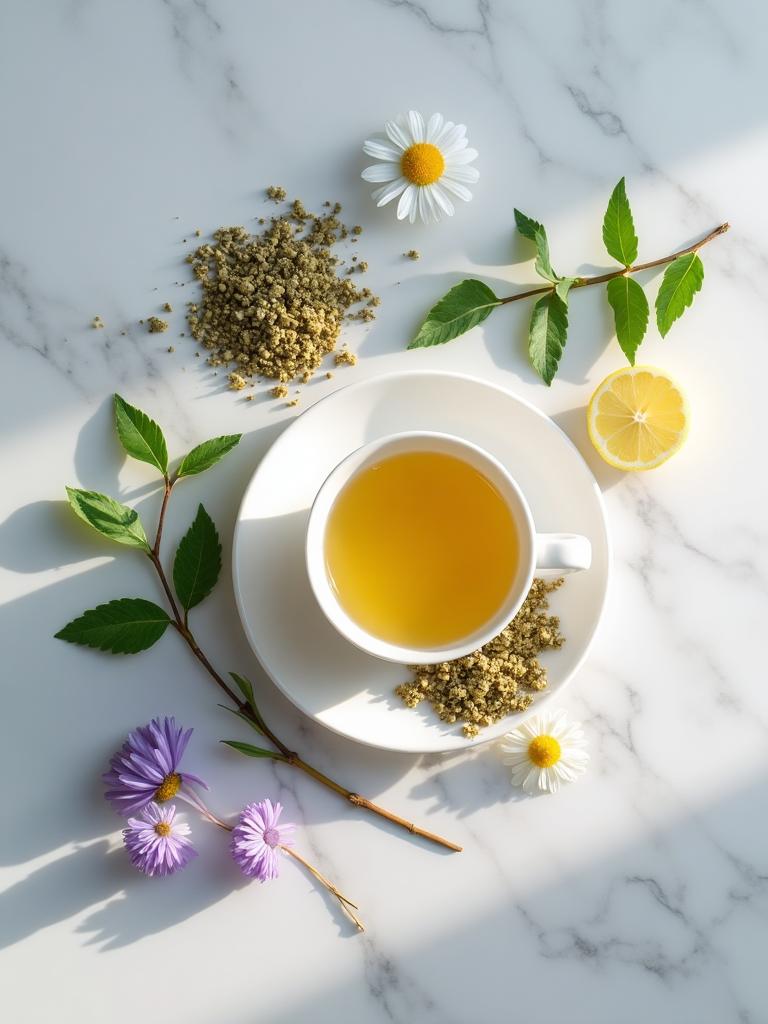
Chamomile tea for sleep isn't folklore — it's one of the most-studied herbal sleep aids in the world, and it actually works. The reason comes down to a single flavonoid called apigenin, which binds to the same brain receptors as anti-anxiety medication (just far more gently). This guide covers exactly how chamomile works, how to brew it for maximum sedative effect, and where it fits in your evening routine.
How chamomile actually helps you sleep
Chamomile flowers contain apigenin, a compound that binds to GABA-A benzodiazepine receptors in the brain — the same receptors targeted by prescription anxiolytics like Xanax and Valium. Apigenin's binding is far weaker, which is why chamomile won't knock you out, but strong enough to reliably lower nervous system arousal. A 2017 randomised trial in elderly adults found that chamomile extract significantly improved sleep quality after 4 weeks compared to placebo.
The three effects that matter for insomnia
- Anxiolytic — quiets racing thoughts and physical tension
- Mildly sedative — lowers time to fall asleep (sleep latency)
- Anti-inflammatory — reduces cortisol response to stress
How to brew chamomile tea for the strongest sleep effect
Most people brew chamomile too weak. To get a therapeutic dose of apigenin, treat it more like a medicinal infusion than a light after-dinner tea:
- Use 2 heaped teaspoons of dried flowers (or 2 teabags) per cup.
- Water at 95°C — just off the boil, not boiling.
- Cover the cup while steeping. This traps the volatile oils that carry the active compounds.
- Steep 10 full minutes. Less than 5 minutes is essentially flavoured water.
- Add a squeeze of lemon — the acidity helps extract apigenin.
When to drink it — timing matters
Apigenin peaks in your bloodstream about 45 minutes after drinking. Aim to finish your last cup 30–45 minutes before you want to be asleep. If you go to bed at 10:30 pm, that means your kettle goes on at 9:30 pm. This is also long enough before sleep to avoid a middle-of-the-night bathroom trip.
Chamomile blends that work even better
Chamomile shines in blends. Our favourite practitioner combinations:
- Chamomile + lemon balm — for stress-driven insomnia. See our lemon balm for sleep guide.
- Chamomile + passionflower — for anxious minds that can't switch off. See passionflower tea benefits.
- Chamomile + valerian — heaviest sedative combo, save it for the worst nights.
Who should be careful with chamomile
Chamomile is one of the safest sleep herbs, but skip it if you:
- Are allergic to ragweed, daisies, chrysanthemums, or marigolds (same plant family)
- Take warfarin or other blood thinners (chamomile has mild anticoagulant activity)
- Are in the first trimester of pregnancy
- Are having surgery within 2 weeks
What chamomile tea won't fix
Chamomile is powerful for stress-driven insomnia — trouble falling asleep because your mind is racing. It won't fix underlying issues like magnesium deficiency, blood sugar swings, cortisol dysregulation, or sleep apnoea. If chamomile helps but only partly, read our full breakdown of the 8 root causes of insomnia — the real fix is usually a combination of one calming herb plus one root-cause intervention.
The bottom line
Chamomile tea is the best entry-point herbal sleep aid: cheap, safe, evidence-backed, and effective for stress-related sleep trouble. Brew it strong, drink it 45 minutes before bed, and give it a week of consistent nightly use before you judge whether it's working for you. For the full picture on herbal sleep tea, see our best herbal tea for sleep guide.
Frequently Asked Questions
How long before bed should I drink chamomile tea?
Drink chamomile tea 30–45 minutes before bed. Apigenin (its active sleep compound) reaches peak blood levels in roughly 45 minutes, so timing your last cup around 9:15 pm for a 10 pm bedtime lets the sedative effect kick in just as you're winding down.
How many cups of chamomile tea should I drink for sleep?
One strong cup (2 teaspoons of loose dried flowers, or 2 teabags, steeped 10 minutes covered) is enough for most adults. Two cups can help if you're stressed or new to it. Drinking more than 3 cups doesn't produce a stronger effect and increases bathroom trips.
Is chamomile tea safe every night?
Yes — chamomile is one of the best-tolerated sleep herbs and safe for nightly use for healthy adults. Avoid it if you're allergic to ragweed, daisies, or marigolds, if you're on blood thinners (chamomile has mild anticoagulant effects), or in the first trimester of pregnancy.
Chamomile tea vs. melatonin — which is better for sleep?
They work differently: melatonin shifts your circadian rhythm (best for jet lag or shift work), while chamomile calms the nervous system (best for stress-driven insomnia). Chamomile is gentler, non-habit-forming, and works better as a nightly wind-down ritual.
Can I combine chamomile with valerian or passionflower?
Yes — chamomile blends beautifully with valerian, passionflower, and lemon balm. See our full comparison in the herbal tea guide. Start with a single herb for a week to see how you respond before blending.
References
- Srivastava JK et al. Chamomile: A herbal medicine of the past with bright future. Mol Med Reports (2010).
- Adib-Hajbaghery M, Mousavi SN. The effects of chamomile extract on sleep quality among elderly people. Complement Ther Med (2017).
- Chang SM, Chen CH. Effects of an intervention with drinking chamomile tea on sleep quality and depression in sleep-disturbed postnatal women. J Adv Nurs (2016).


